Moringa vs Matcha: Comparing Green Superfoods
Both Moringa and Matcha are celebrated as green superfoods, but they come from different sources and offer distinct nutritional profiles and benefits. Understanding their similarities and differences helps you choose which one aligns better with your health goals, or whether using both makes sense for comprehensive nutritional support.
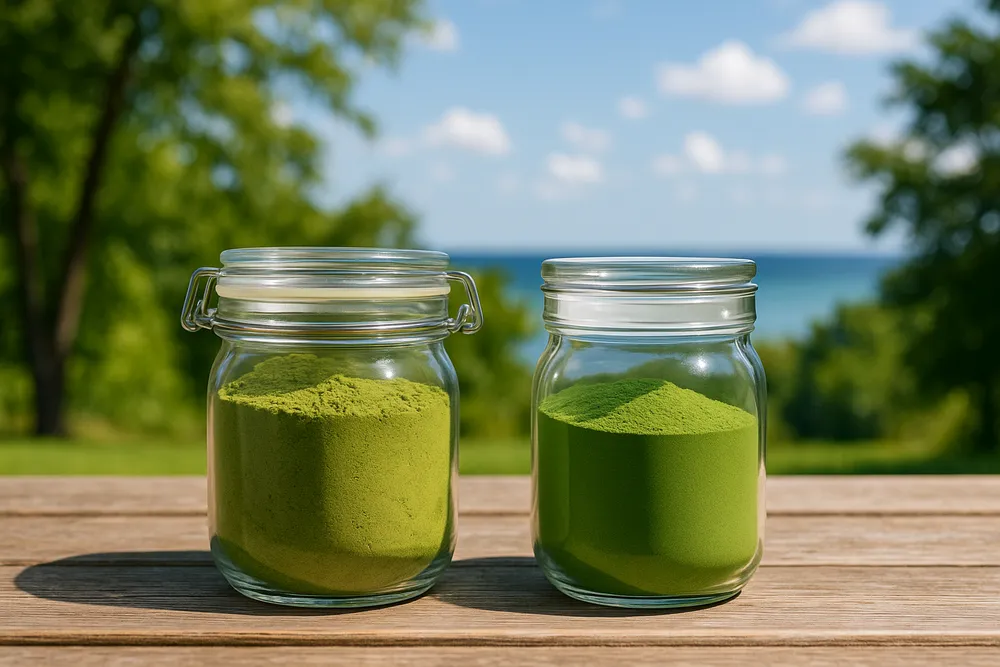
Moringa and Matcha share a vibrant green color and superfood status, but they differ significantly in their origins, nutritional content, and effects. Moringa comes from a tree and provides exceptional amounts of vitamins and minerals, while Matcha comes from tea leaves and is known for its caffeine content and unique antioxidants. The best choice depends on what you’re looking for in a supplement.
Understanding Both Superfoods
Moringa and Matcha come from completely different plant sources, which explains their distinct characteristics and benefits. Understanding what each one is helps clarify why they offer different advantages.
Moringa comes from the Moringa oleifera tree, native to parts of Africa and Asia. The leaves are dried and ground into powder, providing a plant-based source of vitamins, minerals, antioxidants, and complete protein. Moringa has been used traditionally for centuries and is known for its exceptional nutrient density without caffeine.
Matcha is a type of green tea made from shade-grown Camellia sinensis leaves that are stone-ground into a fine powder. Unlike regular green tea where you steep and discard the leaves, with Matcha you consume the entire leaf, getting more nutrients and caffeine. Matcha has been part of Japanese tea culture for centuries and is valued for its energy-boosting properties and unique antioxidants called catechins.
Both are consumed as powders, but they provide different nutritional benefits and effects. Moringa excels in vitamins and minerals, while Matcha is particularly known for its caffeine content and specific antioxidants.
Nutritional Comparison
When comparing Moringa and Matcha nutritionally, they excel in different areas. Both are nutrient-dense, but they provide different combinations of vitamins, minerals, and beneficial compounds.
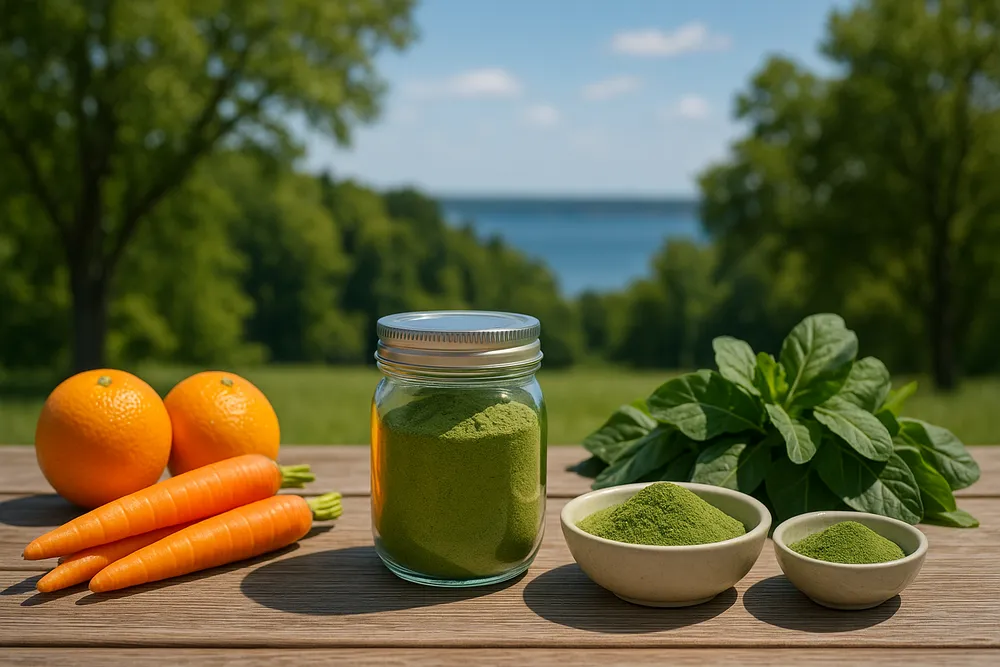
Moringa is particularly strong in vitamin A (beta-carotene), vitamin C, calcium, iron, and potassium. It provides these nutrients in exceptional amounts, often significantly more than common food sources. Moringa also contains all nine essential amino acids, making it a complete protein source, and provides over 90 different nutrients.
Matcha is rich in antioxidants, particularly EGCG (epigallocatechin gallate), which is a type of catechin. It contains some vitamins and minerals, but typically in smaller amounts than Moringa. Matcha’s standout feature is its high antioxidant content and caffeine, which provides energy and mental alertness.
Moringa Strengths
Moringa excels in vitamins A and C, calcium, iron, and potassium, providing these in amounts that often exceed common food sources. It’s also a complete protein source with over 90 nutrients, and contains no caffeine.
Matcha Strengths
Matcha is particularly rich in antioxidants, especially EGCG, and contains caffeine for energy and mental alertness. It provides a unique combination of calm energy due to L-theanine, an amino acid that works with caffeine.
Complementary Benefits
Moringa provides comprehensive vitamins and minerals without caffeine, while Matcha offers unique antioxidants and energy. They can complement each other well, with Moringa filling nutritional gaps and Matcha providing energy and specific antioxidants.
The nutritional comparison shows that Moringa and Matcha complement each other well, with each excelling in different areas of nutrition and wellness.
Caffeine Content
One of the most significant differences between Moringa and Matcha is their caffeine content. This distinction is important for people who are sensitive to caffeine or want to avoid it.
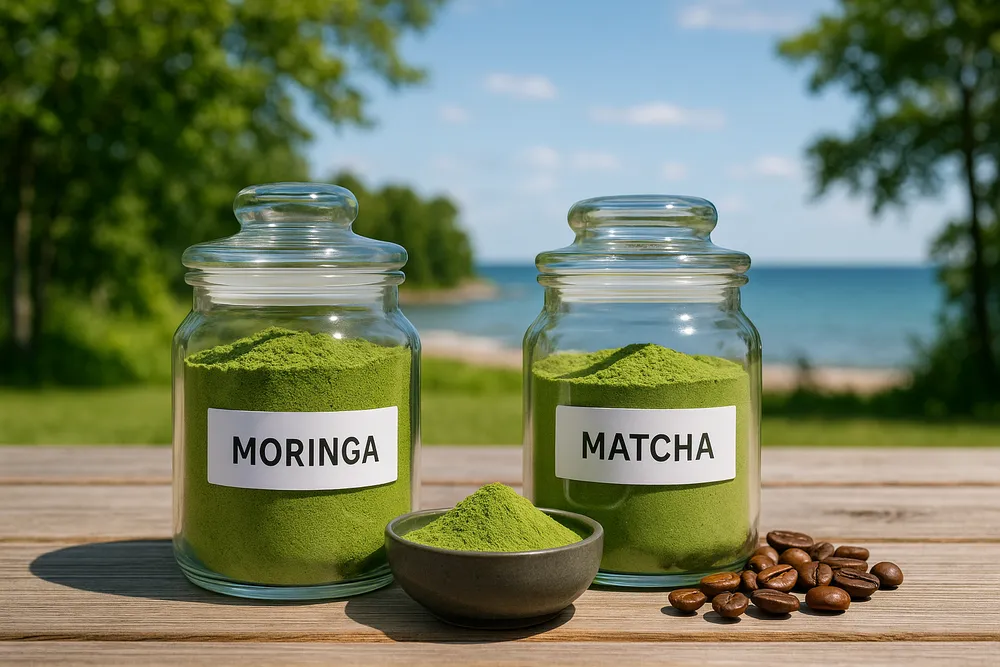
Matcha contains caffeine - typically about 70 milligrams per serving, which is roughly equivalent to a cup of coffee but with a different effect due to L-theanine. The combination of caffeine and L-theanine in Matcha creates a state of “calm alertness” that many people find more pleasant than the jittery energy from coffee.
Moringa contains no caffeine at all, making it an excellent choice for people who want to avoid caffeine or are sensitive to it. This makes Moringa suitable for evening use or for people who want nutritional benefits without any stimulant effects.
Matcha Energy
Matcha provides caffeine for energy and mental alertness, but the L-theanine creates a smoother, more sustained energy without the crashes or jitters associated with coffee. This makes it popular for morning routines and focus.
Moringa Caffeine-Free
Moringa provides nutritional benefits without any caffeine, making it suitable for any time of day, including evening. It supports energy through iron and B-vitamins rather than stimulants, offering sustained vitality without crashes.
Choosing Based on Needs
If you want energy and mental alertness with caffeine, Matcha is the choice. If you want comprehensive nutrition without caffeine, or need something you can take in the evening, Moringa is ideal. Many people use both at different times.
The caffeine difference is a key factor in choosing between Moringa and Matcha, depending on your sensitivity to caffeine and when you want to consume your superfood.
Antioxidant Profiles
Both Moringa and Matcha are rich in antioxidants, but they contain different types that offer distinct benefits. Understanding these differences helps you choose based on your antioxidant goals.
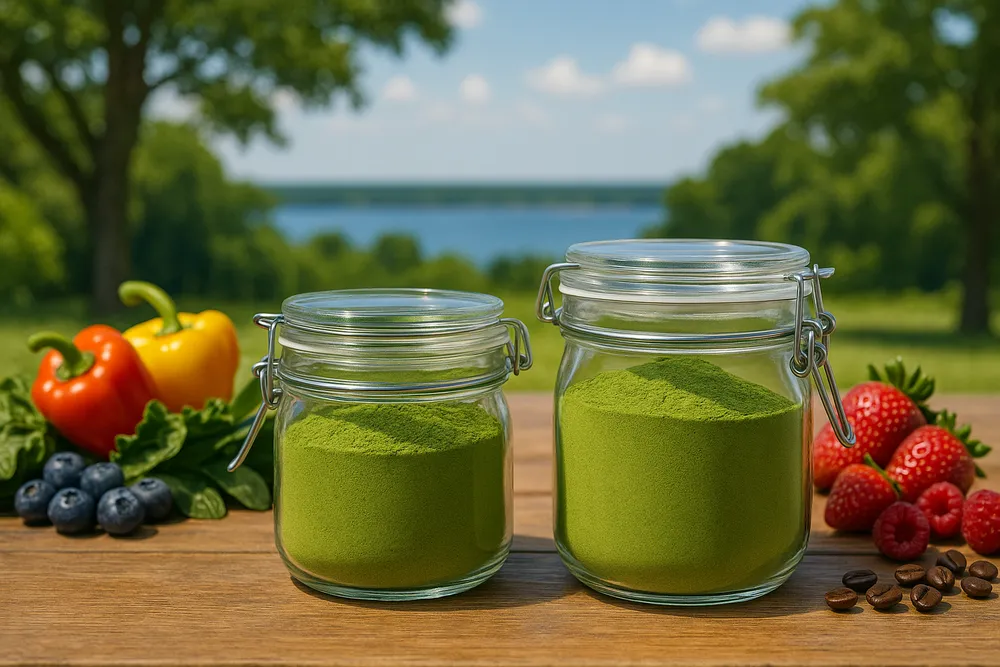
Matcha is particularly rich in catechins, a type of antioxidant found in tea. The most notable is EGCG (epigallocatechin gallate), which has been studied for its potential health benefits. Matcha contains significantly more EGCG than regular green tea because you consume the entire leaf.
Moringa contains various antioxidants including flavonoids, polyphenols, and vitamin C, which acts as an antioxidant. While Moringa doesn’t have the same high concentration of EGCG as Matcha, it provides a broader range of antioxidant compounds along with other nutrients.
Matcha Antioxidants
Matcha is exceptionally high in EGCG and other catechins, providing concentrated antioxidant benefits. These compounds are particularly associated with the health benefits attributed to green tea consumption.
Moringa Antioxidants
Moringa provides a diverse range of antioxidants including flavonoids, polyphenols, and high amounts of vitamin C. This variety, combined with its other nutrients, offers comprehensive antioxidant support.
Combined Benefits
Using both Moringa and Matcha can provide a comprehensive antioxidant profile - Matcha’s concentrated EGCG and catechins, plus Moringa’s diverse range of antioxidants and high vitamin C content.
Both provide valuable antioxidants, but in different forms that can complement each other when used together.
Usage and Preparation
Moringa and Matcha differ in how they’re typically prepared and used, which can influence your choice based on your preferences and routine.
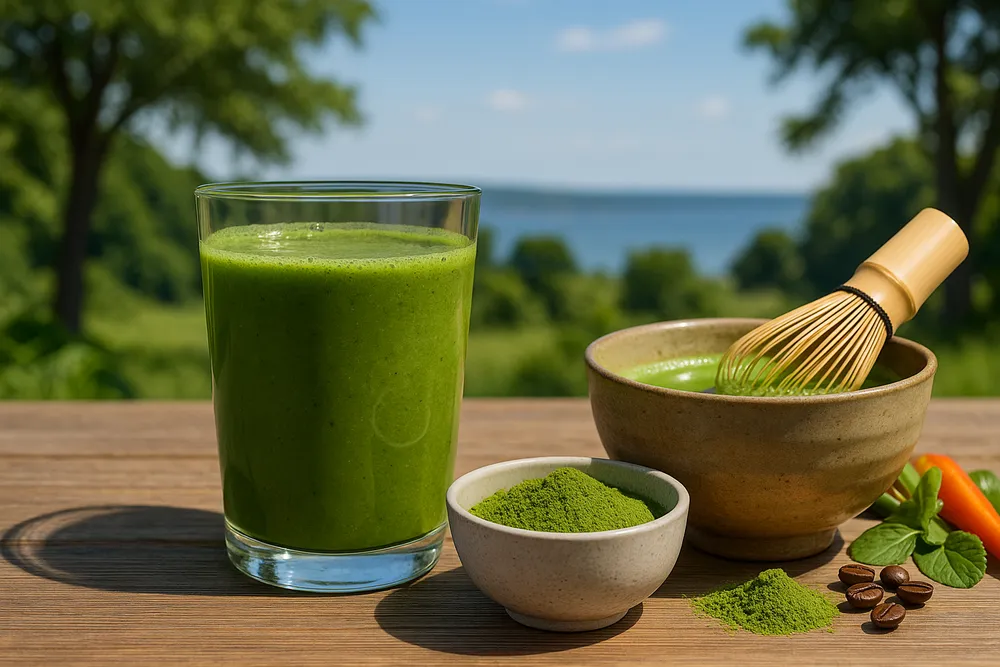
Matcha is traditionally prepared as a tea by whisking the powder with hot water. It has a distinct, slightly bitter, umami flavor that many people like. Matcha can also be added to lattes, smoothies, or baked goods, but it’s most commonly consumed as a tea.
Moringa is more versatile in its usage. It can be added to smoothies, soups, oatmeal, yogurt, and many other foods. Its mild, slightly earthy flavor blends easily into recipes without overwhelming other ingredients. Moringa doesn’t have a traditional preparation method like Matcha, giving you more flexibility in how you use it.
Can You Take Both?
Many people wonder if they can or should take both Moringa and Matcha together. The answer is yes, and they can complement each other well when used strategically.
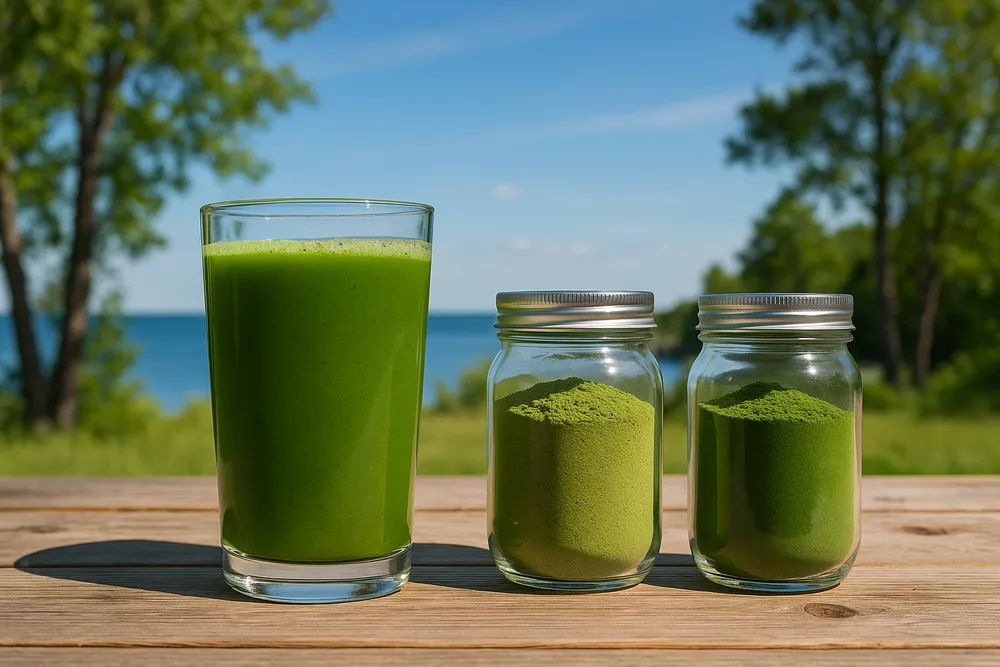
Taking both Moringa and Matcha can provide comprehensive nutritional coverage. Moringa contributes exceptional amounts of vitamins and minerals without caffeine, while Matcha adds unique antioxidants and energy. You can use them at different times - Matcha in the morning for energy, Moringa throughout the day or evening for nutrition without caffeine.
Some people even combine them in smoothies or other beverages, getting the benefits of both in one drink. There are no known negative interactions between Moringa and Matcha, making them safe to use together.
Which Should You Choose?
The choice between Moringa and Matcha depends on your specific health goals, caffeine preferences, and how you want to incorporate a superfood into your routine.
Choose Moringa if you want comprehensive vitamins and minerals, complete protein, and no caffeine. Moringa is ideal if you’re looking for nutritional support without stimulants, want something you can take at any time of day, or prefer versatility in how you use it.
Choose Matcha if you want energy and mental alertness with caffeine, are interested in specific antioxidants like EGCG, or like the traditional tea preparation. Matcha works well for morning routines, focus enhancement, and people who like the unique flavor of green tea.
Consider taking both if you want comprehensive benefits, have different needs at different times of day, or want to maximize your antioxidant and nutritional intake. Many people find that using Matcha in the morning and Moringa throughout the day provides the best of both worlds.
Conclusion
Both Moringa and Matcha are valuable green superfoods that offer different nutritional benefits and effects. Moringa excels in vitamins and minerals without caffeine, while Matcha provides unique antioxidants and energy. The best choice depends on your individual goals and preferences.
In Summary: Moringa provides exceptional amounts of vitamins A and C, calcium, iron, and potassium, along with complete protein and over 90 nutrients, all without caffeine. Matcha offers concentrated antioxidants, particularly EGCG, and provides caffeine for energy and mental alertness. Choose Moringa for comprehensive nutrition without stimulants, Matcha for energy and specific antioxidants, or both for maximum benefits. The decision depends on your health goals, caffeine sensitivity, and how you want to incorporate a superfood into your routine.
Disclaimer
Information presented here is for educational purposes only. It is not medical advice or a substitute for consultation with a qualified healthcare professional. Statements have not been evaluated by the FDA and are not intended to diagnose, treat, cure, or prevent any disease.