Moringa vs Spirulina: Which Superfood is Better?
Both Moringa and Spirulina are celebrated as nutrient-dense superfoods, but they offer different nutritional profiles and benefits. Understanding their similarities and differences helps you choose which one aligns better with your health goals, or whether combining both makes sense for your needs. This comprehensive comparison explores what each superfood offers and how they stack up against each other.
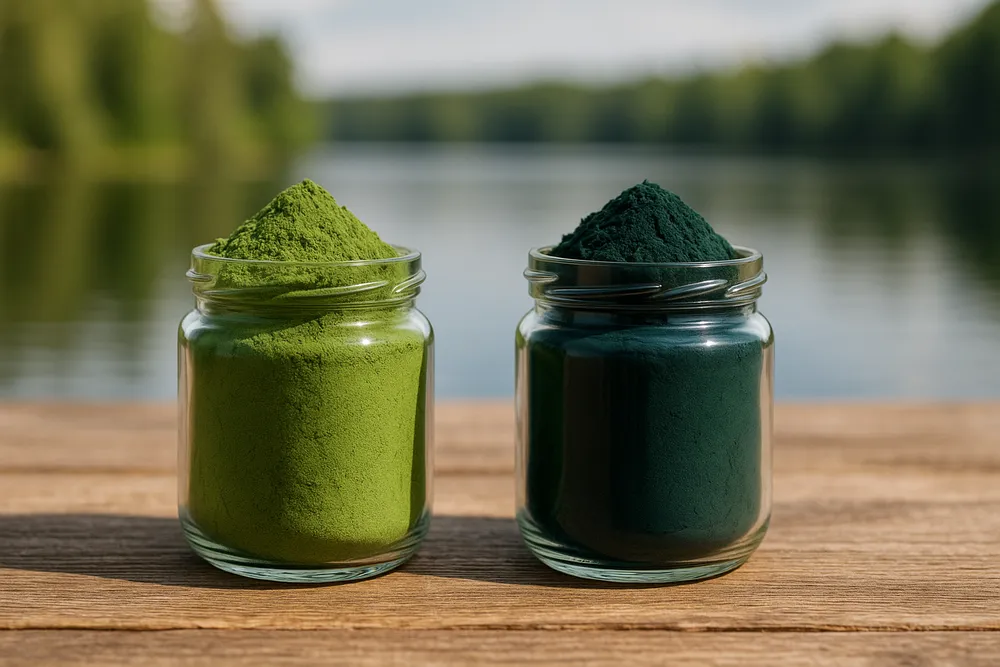
There’s no single answer to which superfood is better because it depends on what you’re looking for. Moringa excels in certain vitamins and minerals, while Spirulina is particularly rich in protein and specific nutrients. Many people find value in incorporating both into their diet to get comprehensive nutritional coverage. The best choice depends on your individual health goals, dietary preferences, and nutritional needs.
Understanding Both Superfoods
Moringa and Spirulina come from completely different sources, which explains their distinct nutritional profiles. Understanding what each one is helps clarify why they offer different benefits.
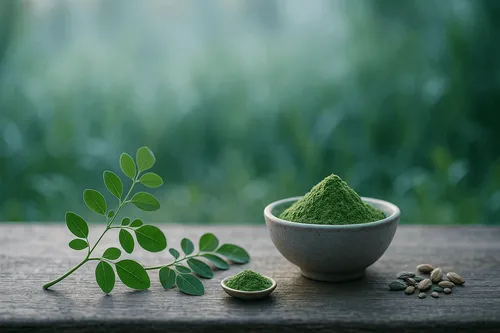
Moringa comes from the Moringa oleifera tree, native to parts of Africa and Asia. The leaves are dried and ground into powder, providing a plant-based source of vitamins, minerals, antioxidants, and complete protein. Moringa has been used traditionally for centuries and is known for its exceptional nutrient density.
Spirulina is a type of blue-green algae that grows in both fresh and saltwater. It’s harvested, dried, and processed into powder or tablets. Spirulina has been consumed for thousands of years and is particularly valued for its high protein content and unique phytonutrients.
Both are considered superfoods because they provide substantial nutrition in relatively small amounts, but they excel in different areas. Moringa is particularly strong in vitamins A and C, calcium, and iron, while Spirulina is known for its protein content, B-vitamins, and specific antioxidants like phycocyanin.
Nutritional Comparison
When comparing Moringa and Spirulina, it’s helpful to look at their overall nutritional profiles to understand where each one shines. Both are nutrient-dense, but they provide different combinations of vitamins, minerals, and other beneficial compounds.
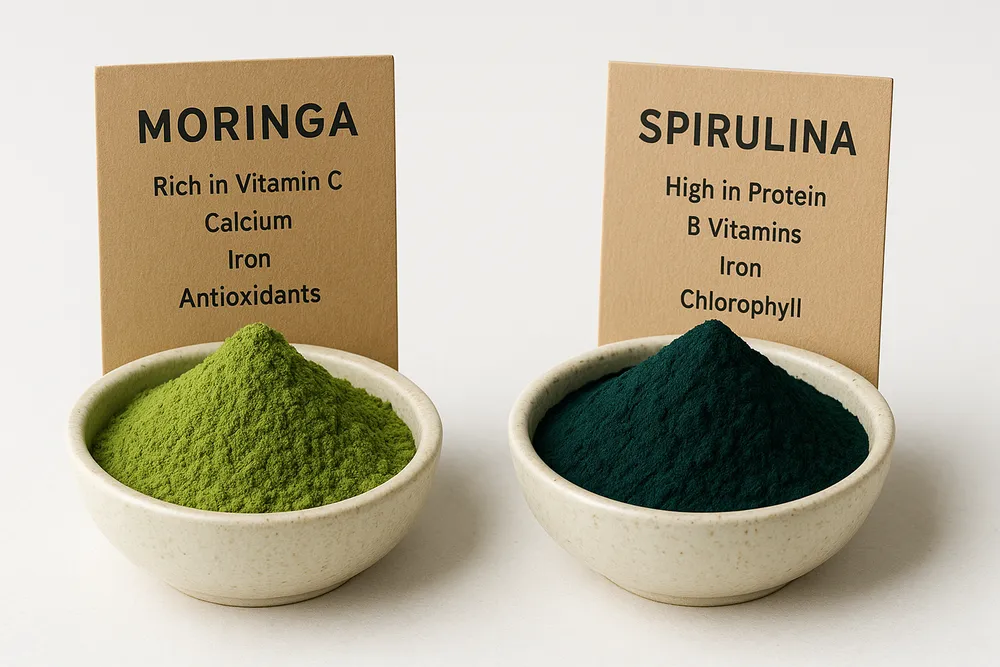
Moringa provides exceptional amounts of vitamin A (in the form of beta-carotene), vitamin C, calcium, iron, and potassium. It also contains all nine essential amino acids, making it a complete protein source. Moringa is particularly rich in antioxidants and contains over 90 different nutrients.
Spirulina is especially high in protein, providing all essential amino acids as well. It’s rich in B-vitamins, particularly B12 (though the form may not be as bioavailable as animal sources), iron, and contains unique compounds like phycocyanin, which gives it its distinctive blue-green color and antioxidant properties.
Moringa Strengths
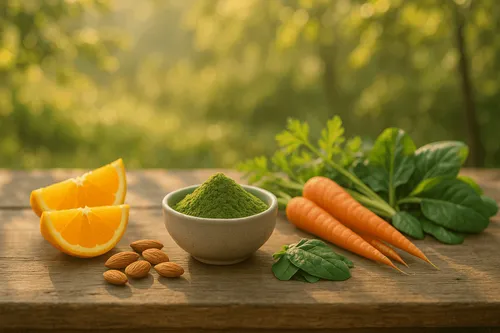
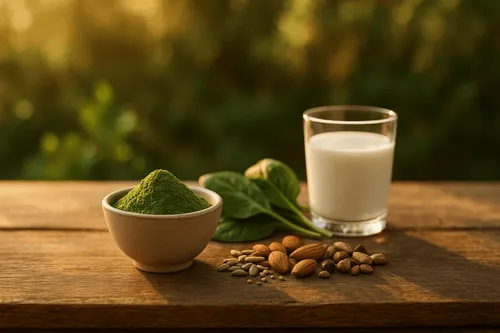
Moringa excels in vitamin A (9x more than carrots), vitamin C (7x more than oranges), calcium (17x more than milk), and iron (25x more than spinach). It provides complete protein and over 90 nutrients in a low-calorie package.
Spirulina Strengths
Spirulina is particularly high in protein (60-70% by weight), rich in B-vitamins including B12, contains iron, and provides unique phytonutrients like phycocyanin. It’s one of the most protein-dense plant foods available.
Complementary Benefits
Both provide complete protein and essential nutrients, but in different amounts. Moringa offers more vitamin A, C, calcium, and iron per serving, while Spirulina provides more protein and B-vitamins. They can complement each other well.
The nutritional comparison shows that both superfoods are valuable, but they excel in different areas. Your choice depends on which nutrients you want to prioritize in your diet.
Protein Content
Both Moringa and Spirulina provide complete protein with all essential amino acids, but they differ in the amount of protein they contain per serving.
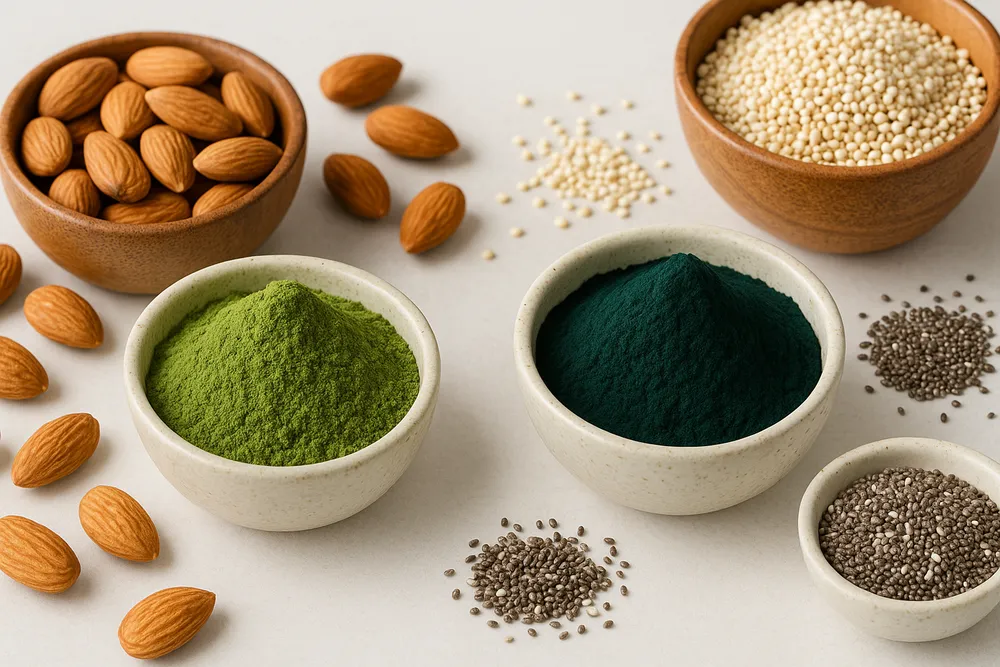
Spirulina is particularly notable for its high protein content. It contains approximately 60-70% protein by weight, making it one of the most protein-dense plant foods available. This high protein content makes Spirulina popular among those looking to increase their protein intake, especially plant-based eaters.
Moringa also provides complete protein with all nine essential amino acids, but in smaller amounts per serving compared to Spirulina. However, Moringa’s protein comes alongside a wide array of other nutrients, making it a nutrient-dense choice even if the protein amount is lower.
Spirulina Protein
Spirulina contains approximately 4-6 grams of complete protein per tablespoon, making it an excellent source for those prioritizing protein intake. Its high protein density makes it efficient for meeting protein needs.
Moringa Protein
Moringa provides approximately 2-3 grams of complete protein per tablespoon, along with substantial amounts of vitamins, minerals, and antioxidants. It offers protein plus comprehensive nutrition.
Choosing Based on Goals
If protein is your primary concern, Spirulina provides more per serving. If you want protein plus exceptional amounts of vitamins and minerals, Moringa offers a more comprehensive nutritional package.
Both provide quality plant-based protein, but Spirulina offers more protein per serving, while Moringa provides protein alongside exceptional amounts of other nutrients.
Vitamin and Mineral Profiles
Moringa and Spirulina differ significantly in their vitamin and mineral content, which is important to consider when choosing between them or deciding how to incorporate both.
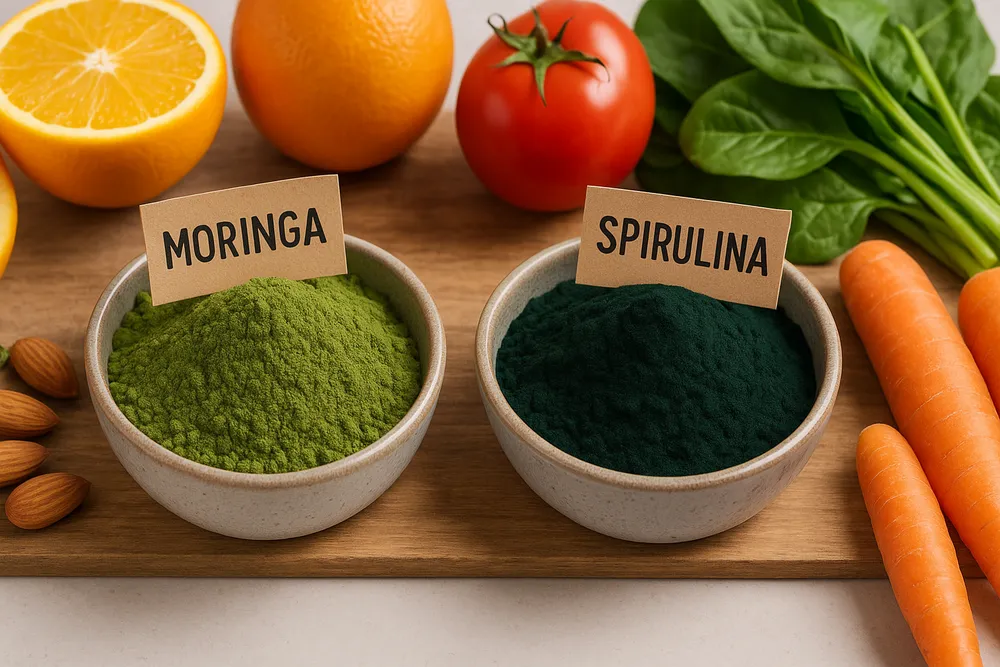
Moringa is particularly strong in vitamin A (beta-carotene), vitamin C, calcium, iron, and potassium. It provides these nutrients in exceptional amounts, often significantly more than common food sources. For example, Moringa has 9x more vitamin A than carrots and 7x more vitamin C than oranges.
Spirulina is rich in B-vitamins, particularly B1, B2, B3, and B12 (though the B12 form may not be as bioavailable as animal sources). It also contains iron, though typically less than Moringa per serving. Spirulina provides unique phytonutrients like phycocyanin that aren’t found in Moringa.
Moringa Vitamins & Minerals
Moringa excels in vitamin A, C, E, and K, plus calcium, iron, magnesium, and potassium. It provides these in amounts that often exceed common food sources, making it excellent for filling nutritional gaps.
Spirulina Vitamins & Minerals
Spirulina is particularly rich in B-vitamins (B1, B2, B3, B12), iron, and contains unique compounds like phycocyanin. It’s a good source of essential minerals but typically provides less vitamin A, C, and calcium than Moringa.
Complementary Coverage
Using both Moringa and Spirulina can provide comprehensive nutritional coverage. Moringa fills gaps in vitamins A, C, and calcium, while Spirulina contributes B-vitamins and additional protein.
The vitamin and mineral profiles show that Moringa and Spirulina complement each other well, with each excelling in different areas of nutrition.
Taste and Usage
Taste and how you use each superfood can influence your choice, as they have distinct flavors and work differently in recipes.
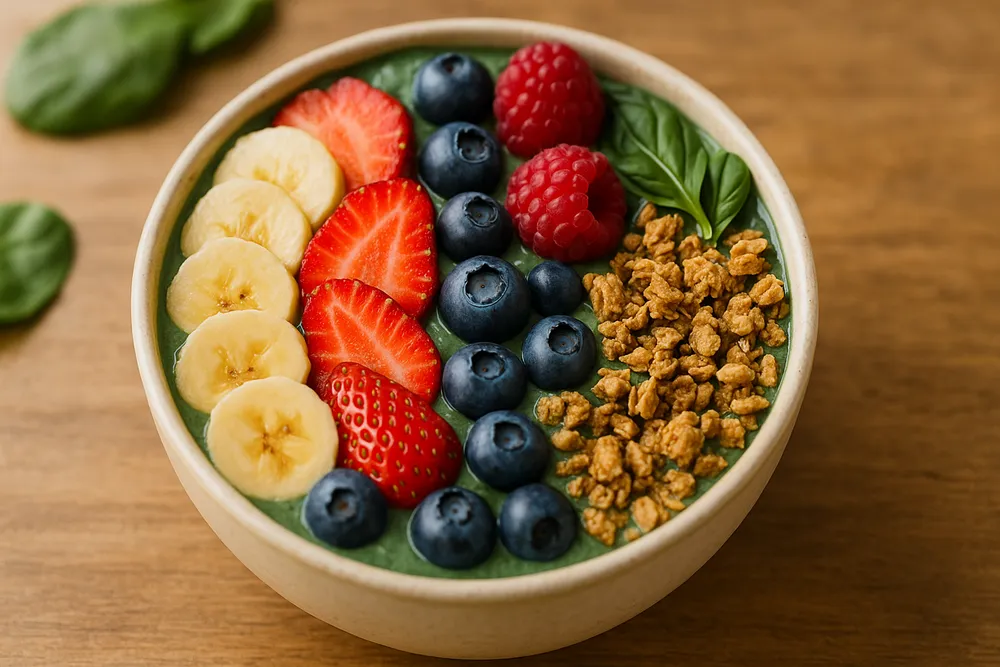
Moringa has a mild, slightly earthy, and somewhat spinach-like flavor. It’s relatively easy to incorporate into smoothies, soups, and other dishes without overwhelming the taste. Many people find Moringa more palatable than Spirulina, especially when starting out with superfoods.
Spirulina has a stronger, more distinctive taste that’s often described as earthy, slightly fishy, or seaweed-like. Some people find it challenging at first, though many develop a taste for it. Spirulina’s strong flavor can be masked in smoothies with fruits, but it’s more noticeable than Moringa.
Both can be added to smoothies, mixed into foods, or taken as capsules. Moringa tends to blend more easily into recipes without significantly altering flavor, while Spirulina often requires stronger-flavored ingredients to mask its taste.
Can You Take Both?
Many people wonder if they can or should take both Moringa and Spirulina together. The answer is yes, and many people find value in combining them.
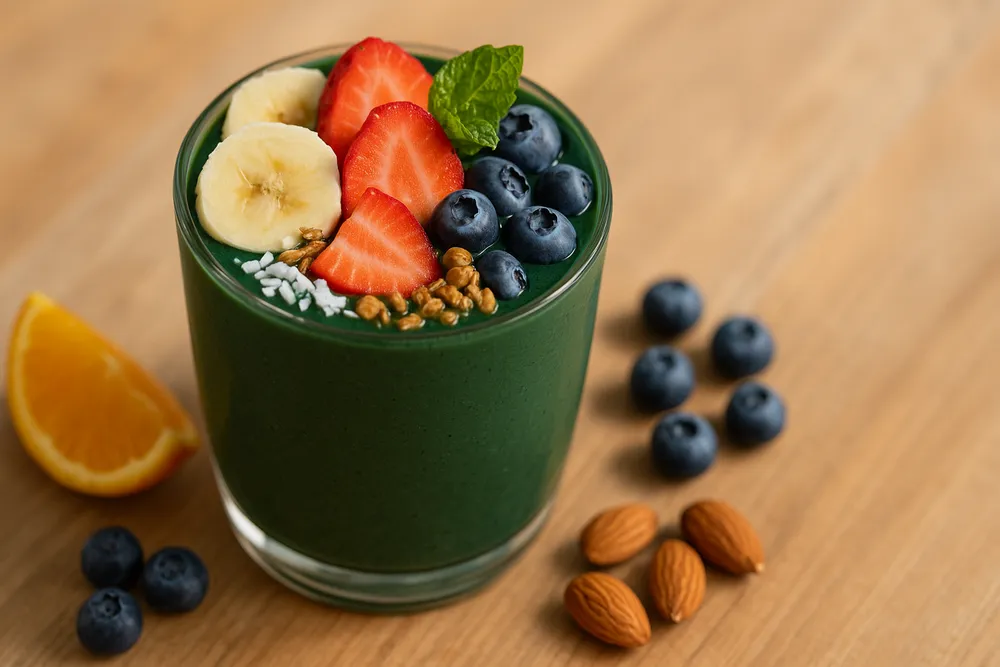
Taking both Moringa and Spirulina together can provide comprehensive nutritional coverage. Moringa contributes exceptional amounts of vitamins A and C, calcium, and iron, while Spirulina adds protein, B-vitamins, and unique phytonutrients. Together, they can create a well-rounded nutritional foundation.
There are no known negative interactions between Moringa and Spirulina. They’re both natural, whole-food supplements that can complement each other well. Many people take them together in smoothies or at different times of day to maximize their nutritional benefits.
If you choose to take both, you might want to start with smaller amounts of each to see how your body responds, then adjust based on your needs and goals. Some people take them together in the same smoothie, while others prefer to take them at different times to spread out their nutrient intake throughout the day.
Which Should You Choose?
The choice between Moringa and Spirulina depends on your specific health goals, nutritional needs, and preferences. There’s no single right answer for everyone.
Choose Moringa if you want exceptional amounts of vitamins A and C, calcium, and iron. Moringa is ideal if you’re looking for comprehensive vitamin and mineral support, want a milder taste, or prefer a superfood that blends easily into recipes.
Choose Spirulina if protein is a primary concern, you want B-vitamin support, or you’re interested in unique phytonutrients like phycocyanin. Spirulina works well for those who don’t mind a stronger taste or can easily mask it in smoothies.
Consider taking both if you want comprehensive nutritional coverage, have diverse health goals, or want to maximize the benefits of both superfoods. Many people find that combining them provides the best of both worlds.
Conclusion
Both Moringa and Spirulina are valuable superfoods that offer different nutritional benefits. Moringa excels in vitamins A and C, calcium, and iron, while Spirulina is particularly strong in protein and B-vitamins. The best choice depends on your individual goals and needs.
In Summary: Moringa provides exceptional amounts of vitamins A and C, calcium, and iron, along with complete protein and over 90 nutrients. Spirulina offers high protein content, B-vitamins, and unique phytonutrients. Both are complete protein sources and can be taken together for comprehensive nutritional support. Choose Moringa for vitamin and mineral density, Spirulina for protein and B-vitamins, or both for maximum nutritional coverage. The decision depends on your health goals, taste preferences, and nutritional priorities.
Disclaimer
Information presented here is for educational purposes only. It is not medical advice or a substitute for consultation with a qualified healthcare professional. Statements have not been evaluated by the FDA and are not intended to diagnose, treat, cure, or prevent any disease.